Strength and support
In the monastic life, as with other vocations that take a lifetime to grow into, vows are professed to willingly bind oneself to a certain commitment. To have an identity secure enough to be able to commit to an other is a sign of strength. It’s incomplete strength to be sure, and the work of commitment will bring to light any and all hidden insecurities, from constantly maneuvering for control, to reluctance to fully commit for fear of loss of control. To grow into mature trust is not the work of a few years, but of a life.
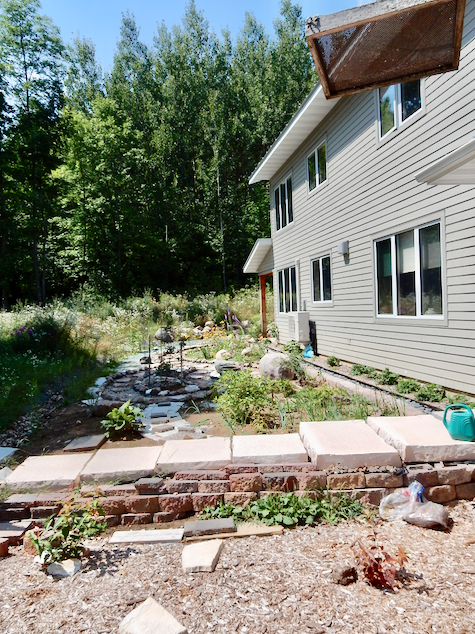
But vows themselves—what do they do, what are they for? Consider the example of a house. Like a healthy community or family, it provides a sturdy context, a bounded space within which one can live, grow, rest, and become—a place within which one can both give oneself to others and take a certain amount of risk.
This is just what vows do. They provide a structure of integrity and accountability that can contain all this life and growth and falling down and getting up again, and are a sign of a bond wherein (or whereby) one can safely learn and be known.
And with both house and vows, it is notable to remember that the door lock is operated from the inside of the house, not the outside.